What quiet hours are
A quiet hour is a part of the day when your kitchen is open and staffed but has few orders. It may be the afternoon after lunch, for example from 14:00 to 17:00, the morning before the dining room opens or a late weekday evening.
Every kitchen has its own rhythm. Measure yours before changing anything instead of assuming it matches a neighbour's.
Find them in your venue
You do not need a new tool. Use one week's data, preferably two, from your existing till system.
- Get hourly sales for each day of the week.
- Mark when the kitchen is open and staffed.
- Compare dishes served with what the line can produce during peak hours.
- List hours when it works well below capacity.
- Check whether the pattern repeats weekly or was unusual.
You will usually find recurring windows. Note who works then and which equipment is free, because this determines what can be cooked.
Do not use only a weekly average. Monday afternoon may differ from Friday, while Saturday may be busy from morning. A quiet Tuesday hour can be a weekend peak. List windows separately for each day so a virtual brand runs when the kitchen actually has room for it.
What an empty hour costs
A quiet hour still costs money. Staff are present, equipment is hot and rent is due. With few plates sold, the cost per plate is high.
Add the kitchen's staffing cost for that hour and its share of rent and utilities. Divide by dishes served. For illustration only, if the hour costs PLN 200 and you serve two dishes, each carries PLN 100 before ingredient costs. During a rush, the same amount is spread over many plates.
Extra orders in a quiet hour spread costs already being paid across more dishes. The calculation still needs to include any additional costs caused by those orders.
Why simply closing may not work
Shortening opening hours or sending people home sometimes helps, but may be impractical. The kitchen needs preparation for dinner, someone must make ingredients ready, and equipment takes time to heat. A gap can be too short to close and too long to ignore.
Another option is a dining-room promotion. It may work but needs advertising, and weekday afternoons often have fewer seated customers. Delivery reaches people at home or work without bringing them into your venue.
What can fill those hours
Afternoon demand differs from lunch: smaller orders, more individuals and more food sent to homes or offices. A suitable menu can be shorter and quicker than the lunch menu.
You could put your existing menu in the apps and wait for afternoon orders. A virtual brand offers a separate restaurant name, menu and photos aimed at customers seeking a specific food, such as pierogi or schnitzel. Your existing menu stays, while the new brand reaches people who were not searching for your venue.
We match quiet-hour brands to what your kitchen already does:
- Mniamciu, for kitchens serving lunch: soups, main dishes and sides. List only what you have that day.
- Sznyclove, for kitchens with pork or chicken cutlets.
- Holy Taco, for menus with tortillas and kebab.
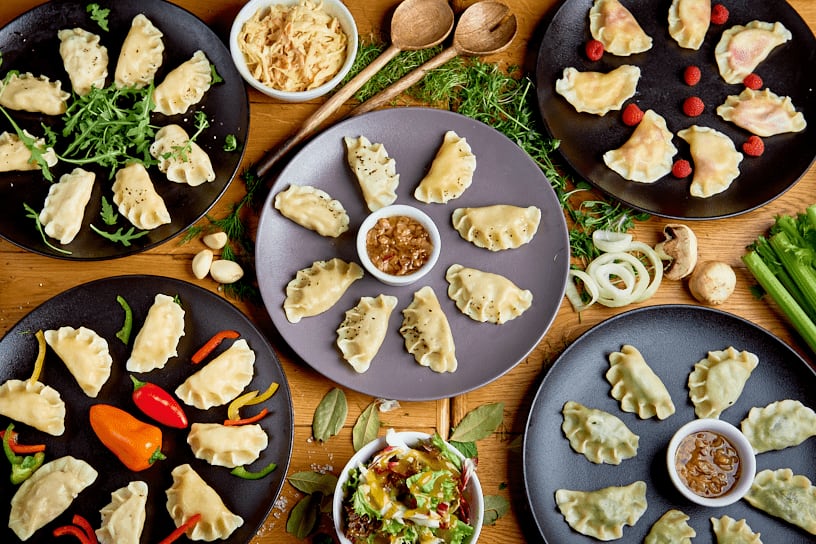
- Grube Pierogi, handmade pierogi served in portions of six.
- Rano Podano, for quiet mornings: breakfasts using simple kitchen ingredients.
You use ingredients you already buy and choose your suppliers. Takeaway packaging is needed; if you do not have it, we help arrange a discount. Recipes and a shopping list are available on request.
Keep extra orders out of the rush
If extra delivery traffic competes with your busiest service, the model stops helping. Seated guests wait, bags block the collection counter and the team has to choose which order comes first. We ask about this at the start of consultation.
You control the hours a brand is available. Orders from all apps reach one Rebel APP device, which also manages menu and venue availability. If the dining room fills earlier than usual, switch off the brand. Switch off a sold-out item once to remove it from all apps. Read Five tablets on the counter for more about one-screen work.
Calculate whether it pays
With our brands, there are no joining or monthly fees. Our commission is 35% of each transaction. We cover marketing costs and platform commissions. Settlement is monthly: you receive a VAT invoice with 23% VAT for our commission, and the remaining amount goes directly to your account.
What remains depends on ingredients, packaging and orders received during your chosen windows. Our partners handle an average of 150 to 600 monthly orders, bringing up to PLN 40,000 in additional monthly revenue. Our article How to calculate virtual restaurant earnings walks through one dish.
Watch the first weeks
Orders can arrive from the first day after launch, while building sales at a location takes more weeks. Watch three things:
- whether delivery orders arrive in quiet hours or during the rush,
- how long the team takes per order and whether collection keeps up,
- which items run out most often, to improve purchasing.
You have an adviser throughout our cooperation. We discuss these questions regularly, before they become bigger problems.
Where to start
Leave your phone number and the venue's name and address in the form. We call back within 24 hours on working days and arrange a free consultation.
We ask about equipment, menu and hours, then choose a brand for your quiet periods. If it does not make sense, we say so. See I have a kitchen and want more orders for details.